
How to Start Baby-Led Weaning (A Simple Guide)
You've read about it. You've watched the videos. You've got a rough idea of what baby-led weaning is supposed to look like.
But now you're actually standing in your kitchen, your baby is sitting in the high chair, and suddenly you're not sure what to do first.
That's exactly the bit nobody explains properly. So let's just go through it, without the fuss. (If you're not quite sure what baby-led weaning is yet, our guide to the basics is where to start.)
First, breathe. There's no right way to start.
Before you do anything, know this: you cannot get this wrong.
There's no perfect first meal. No food your baby has to have on day one. No technique you need to master. Your baby is just a person who hasn't tried food yet. They don't have expectations, and they don't know if you're doing it "properly." They're going to sit there and see what happens, and so are you.
The goal in the early days isn't eating, it's about exploring the wonder of food. Keep that in mind and the whole thing gets much less stressful. If you're still not sure whether now is the right moment, the signs your baby is ready are worth a quick look first.
What you actually need (it's not much)
You don't need a kit. No special plate, no set of weaning spoons, no meal planner on the fridge. For your first few sessions, you just need:
- Somewhere safe for your baby to sit upright. A high chair is ideal, though a bouncy chair propped up or a Bumbo at the table works fine in the early days too.
- A bib. A full-coverage one with a pocket is a lifesaver, but any bib will do.
- Something to put food on: a tray, a plate, or just the high chair surface.
- A cloth or wipes for afterwards.
Start simple. You can add things as you go.
When should you offer food?
Once a day to begin with. That's the sweet spot.
Pick a time when your baby is in a good mood: not overtired, not absolutely starving, and not right after a full milk feed when they've got zero interest in anything else. Mid-morning works well for a lot of families, but you'll figure out what suits yours.
Worth saying clearly: milk is still your baby's main nutrition at this stage. Food is practice right now. It's not replacing anything yet, so don't stress if they eat almost nothing. They're not supposed to be eating much.
Day 1: What it actually looks like
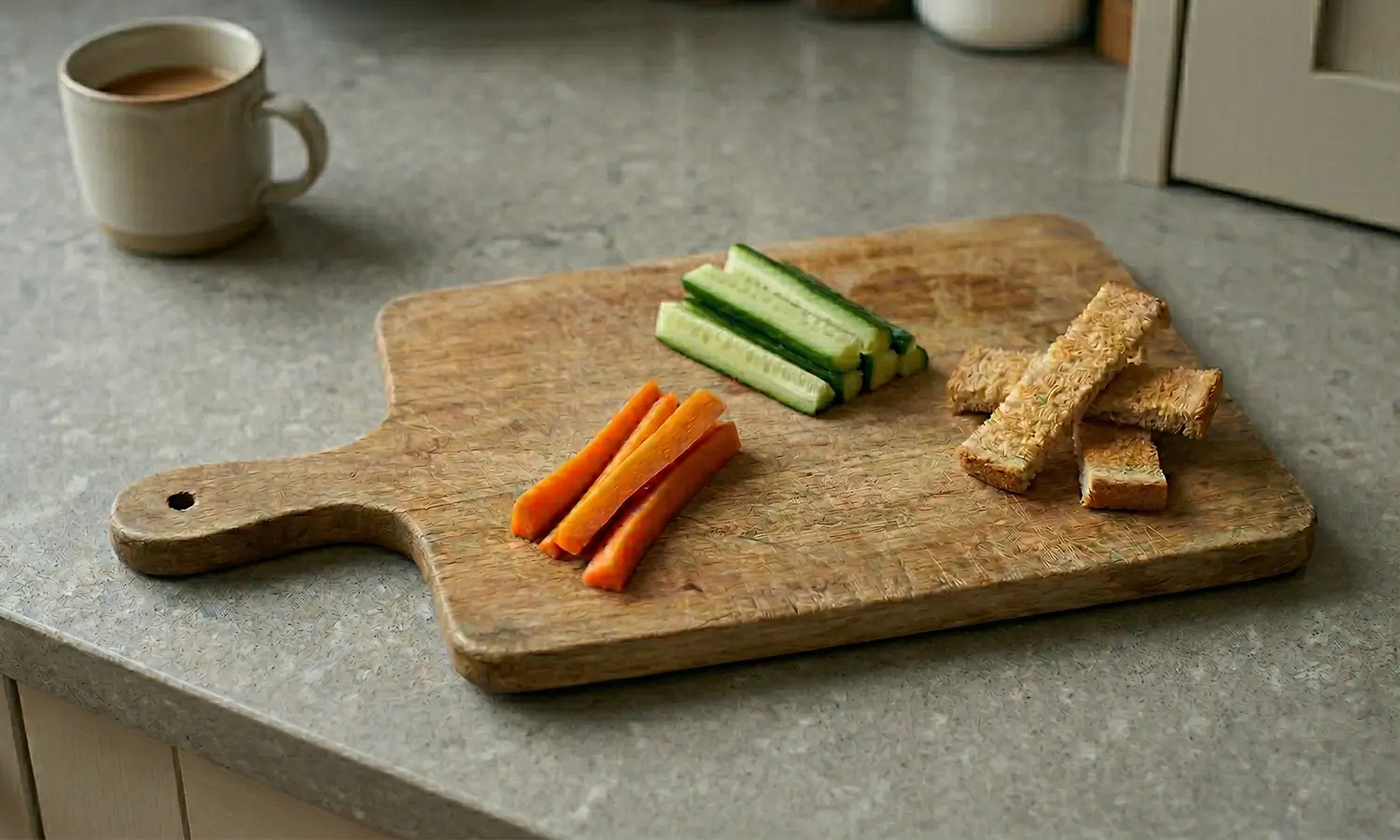
Sit your baby in their chair. Put one or two pieces of soft food in front of them: something easy to grab, like a thick slice of ripe banana, a soft stick of steamed carrot, or a strip of avocado. Then stay close and let them at it!
Don't put the food in their hand. Don't show them what to do. Let them reach for it, squish it, ignore it, smear it on their face. All of that is exactly right.
End the session when they lose interest or start getting frustrated. Around five to ten minutes is usually plenty.
What's normal on day one:
- They don't eat anything
- They play with it and throw it on the floor
- They look at you like you've lost your mind
- They get a bit in their mouth and immediately spit it out
- They seem completely uninterested
Every single one of those is fine and completely expected.
Days 2 and 3: Getting used to it
These first few days are mostly about you getting comfortable, not your baby.
You'll probably notice food on the floor, food in their hair, things being enthusiastically squished and then completely ignored. Very little actually swallowed. Days where they seem fascinated, days where they couldn't care less.
This is all normal. They're learning what food is: what it feels like, what it smells like, what happens when they grab it. That's the whole point of this stage.
Days 4 and beyond: you're already doing it
By now you're in a rhythm, even if it doesn't feel like one. Start offering a bit more variety across the week so they get used to different tastes and textures. Let them join you at mealtimes if you can. Babies don't need their own separate menu; they just need to be part of the table, and they learn a lot from watching you eat.
Keep things soft enough to squish between your fingers, and always stay nearby while they eat. That's the main rule that doesn't change.
There's no big "next level" moment. You just keep going, and gradually they eat a bit more, make a bit less mess (maybe), and start to have opinions about what they like. It creeps up on you.
What should you actually give them?
Start simple. Soft, easy-to-hold things work best: ripe banana cut into fingers, steamed broccoli florets, soft cooked carrot sticks, avocado, toast fingers with a thin spread. Things they can pick up and squish, not things that crumble or break into small pieces.
For a proper list of what works well in these early weeks, our guide to best first foods for baby-led weaning covers what to use, what to avoid, and how to prep things safely.
The stuff parents actually worry about
"What if they choke?" Gagging is really common in the first few weeks and looks much scarier than it is. It's a protective reflex, your baby moving food around to keep themselves safe, not the same as choking. Our gagging vs choking guide covers the difference properly and is worth a read before you start if this is on your mind.
"They're just throwing everything on the floor." Yes. This is weaning. Dropping things is part of how they learn: there's a genuine cause-and-effect discovery happening every time something hits the floor. A mat underneath the high chair helps with your sanity, but the throwing is normal and will ease off eventually.
"Are they eating enough?" At this stage, probably not much, and that's okay. Milk is still doing the heavy lifting nutritionally. If you're worried about your baby's growth or intake, your health visitor is a good first call.
"Am I doing this right?" Almost certainly yes. If your baby is sitting up, you're offering soft food, and you're staying nearby, you're doing it right.
One last thing
It's messy. Properly, spectacularly messy, in a way that no amount of reading quite prepares you for.
Some babies take to it immediately and stuff their faces from day one. Others take weeks to show much interest — if that's where you are, there's more on why that's completely normal here. Either way, it's all normal!
You're just getting started, and getting started is genuinely the hardest bit. There's lots of fun to be had so try and enjoy this special milestone together!